A strong storm can turn a solid-looking fence into a problem overnight.
Maybe one section is leaning. Maybe a gate will not latch. Maybe a tree limb cracked several boards, or the posts feel loose after heavy rain and wind. For Fenton homeowners, the big question is usually the same:
Can the fence be repaired, or does it need to be replaced?
The answer depends on what actually failed. Broken boards, loose panels, bent hardware, and minor chain link damage can often be repaired. But if the posts are moving, the wood is rotting at the base, or several sections are already weak, replacement may be the smarter long-term choice.
Here is how to look at storm fence damage before calling a contractor.
Key Takeaways
- Not all storm-damaged fences need full replacement.
- Broken boards, loose pickets, damaged rails, and gate hardware issues can often be repaired.
- Leaning posts, rot at the base, or damage across multiple sections may point toward replacement.
- Fences should be checked quickly after high winds, falling limbs, or saturated soil.
- Take photos before moving damaged materials, especially if insurance may be involved.
- Sexton Fence provides fence repair services for issues like broken panels, weakened structures, leaning or sagging fences, rust, loose fasteners, rotting wood, and gate malfunctions.
What Storm Damage Usually Looks Like on a Fence
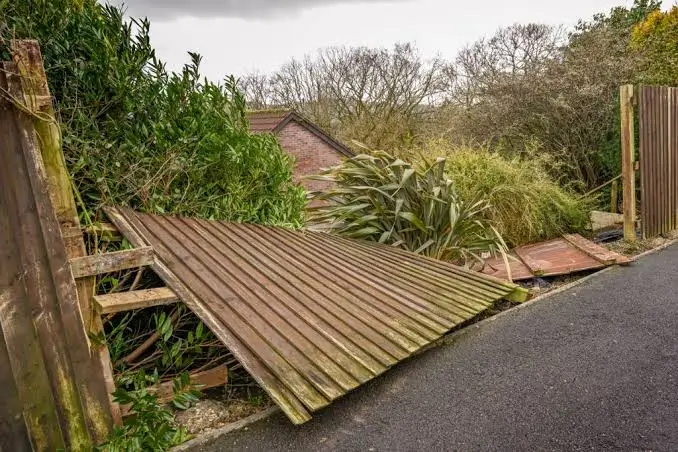
Storm damage is not always dramatic. Sometimes it is obvious, like a fallen limb crushing a section of wood fence. Other times, the damage starts small and gets worse over the next few days.
After a storm in Fenton, check for:
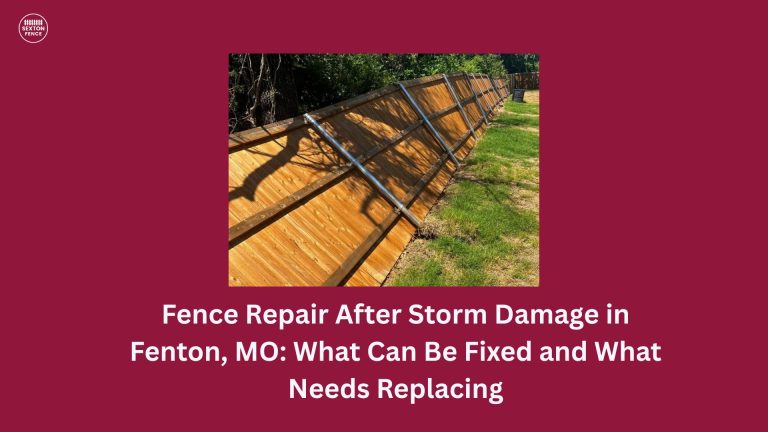
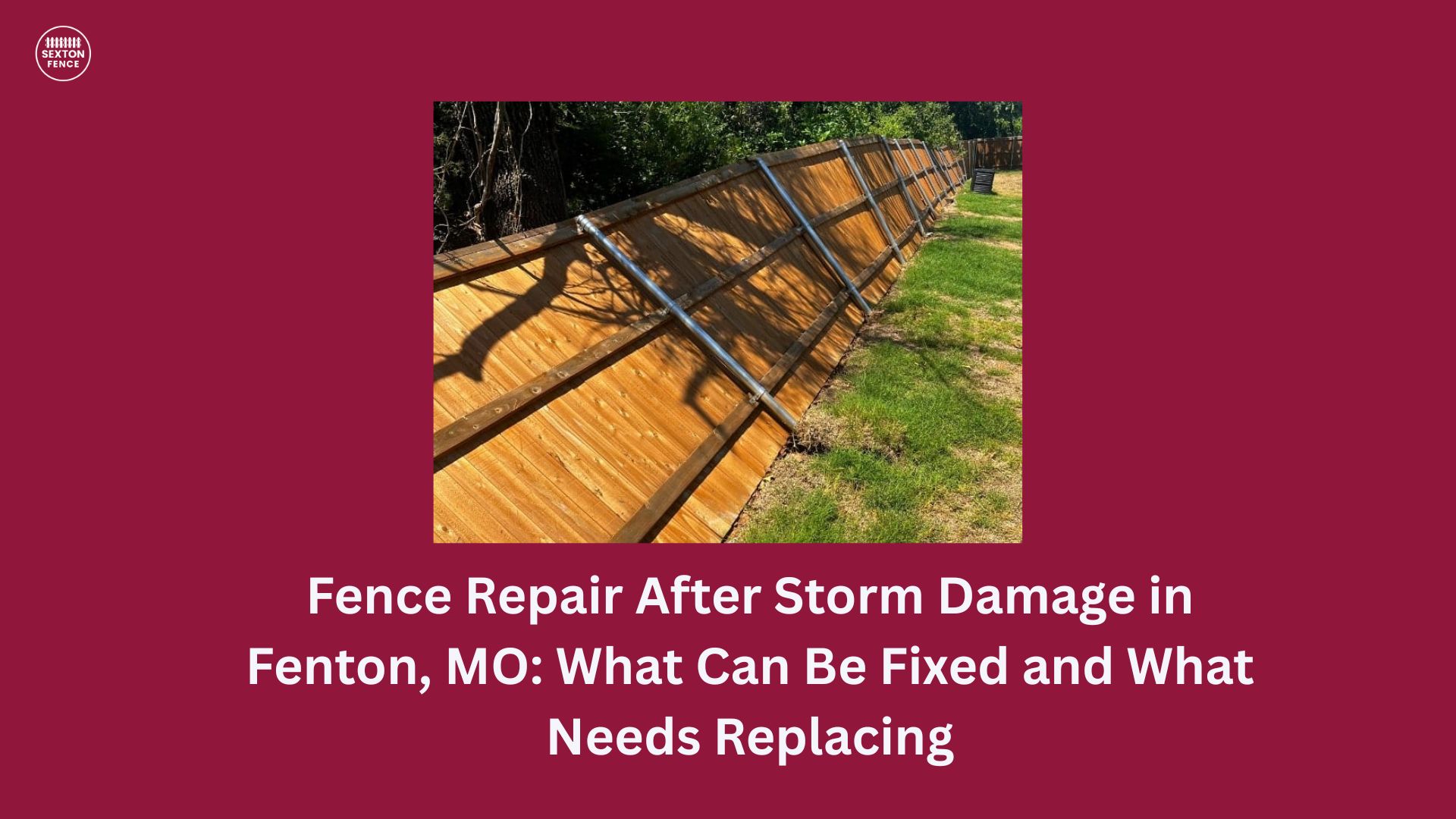
- Leaning fence sections
- Broken or missing boards
- Cracked rails
- Loose pickets
- Damaged vinyl panels
- Bent chain link fabric
- Sagging gates
- Gates that no longer latch
- Posts shifting in wet soil
- Rusted, loose, or missing fasteners
- Sections pulling away from posts
- Tree limb impact damage
First, Check If the Fence Is Safe
Before deciding whether the fence can be repaired, make sure the area is safe.
Do not push, pull, or lean on a damaged fence section to “test it.” If a post has shifted or a section is barely attached, pressure can make it fall. Keep kids and pets away from broken boards, exposed nails, loose screws, bent metal, and sharp vinyl edges.
If a gate is stuck or sagging, avoid forcing it open or closed. A damaged gate can put more stress on an already weak post.
It also helps to take photos before moving anything. Get wide shots of the fence line and close-up photos of broken boards, bent hardware, leaning posts, fallen limbs, or damaged gates. If you contact your insurance provider, those photos may help explain what happened.
Fence Damage That Can Usually Be Repaired
Some storm damage looks bad but does not require a full fence replacement. If the posts and main structure are still solid, a repair may be enough.
Broken or Missing Boards
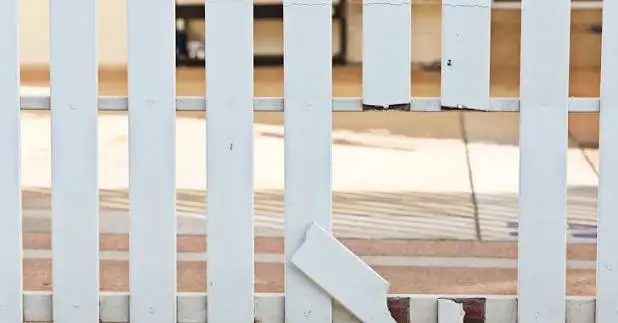
Wood fence boards and pickets are often repairable if the posts and rails are still in good condition.
If a few boards cracked, came loose, or were knocked out by wind or debris, a contractor may be able to replace those boards without rebuilding the entire fence line. The key is checking what those boards were attached to. If the rails are still strong and the posts are not leaning, repair is usually more realistic.
Damaged Rails
Rails carry much of the fence’s structure. If one rail cracked from impact but the surrounding posts are stable, that rail may be replaced.
But if several rails are splitting, sagging, or pulling away from the posts, the damage may be deeper than one storm. In that case, the fence should be inspected for age, rot, and structural weakness.
Loose Fence Panels
A loose panel does not always mean the whole fence has failed.
Sometimes wind pulls a panel away from the post because fasteners loosened or brackets failed. If the post spacing is still correct and the posts are not moving, the panel may be resecured or replaced.
This is common after strong winds because the panel catches pressure like a sail, especially on tall privacy fences.
Gate Hardware Problems

Storms can knock a gate out of alignment. You may notice that the latch no longer lines up, the gate drags on the ground, or the hinges feel loose.
In some cases, the fix is simple hardware adjustment. In other cases, the gate is fine but the post holding it has shifted. That is why the post should be checked before replacing the latch.
Sexton Fence lists gate repair as one of its services and notes that gate issues can include misalignment and malfunctioning locks.
Minor Chain Link Damage
Chain link fences can often be repaired if the posts and top rail are still stable.
Bent fabric, loose ties, or a damaged section of mesh may be fixable. But if the posts are bent, the top rail is crushed, or the fence line has shifted, the repair may be more involved.
Fence Damage That May Require Replacement
Some damage is not worth patching because the fence no longer has a strong foundation. This is where replacement may make more sense.
Posts Are Leaning or Moving
Fence posts are the foundation of the fence.
If one post moves slightly, repair may be possible. But if several posts are leaning, loose, or moving in the ground, replacing panels will not solve the real problem. The fence may continue to shift every time the soil gets wet or the wind picks up.
This is especially important after storms with heavy rain because saturated soil can make weak posts move more easily.
Rot at the Base of Wood Posts
A wood fence can look decent above ground while the bottom of the posts is failing.
If the base of the post is soft, dark, cracked, or crumbling, storm damage may simply expose an existing rot problem. Replacing a few pickets will not fix a post that is already decaying below the surface.
Sexton Fence’s fence repair page lists rotting wood as a sign that a fence may need repair. If the rot is widespread, replacement may be the better long-term option.
Multiple Sections Are Failing
If only one section was hit by a tree limb, repair may be enough.
But if several sections are leaning, rails are separating, boards are loose, and posts are moving, the fence may be reaching the end of its service life. In that situation, repeated small repairs can become more expensive than replacing the weak fence line.
The Fence Was Already Old or Weak
Storms often reveal problems that were already there.
If the fence was leaning before the storm, had loose boards, rotted posts, sagging gates, or rusty fasteners, the storm may be the final push. Repair can still be considered, but it should be compared honestly against replacement.
Vinyl Panels or Rails Are Cracked Beyond Reuse
Vinyl fences can sometimes be repaired by replacing a damaged panel, rail, or post component.
But if the material is cracked across multiple sections, badly warped, or no longer fits securely into the posts, replacement may be needed for that section. A fence contractor should check whether matching parts are available and whether the existing posts are still usable.
Fence Repair vs Replacement: How Fenton Homeowners Can Decide
Use this as a simple starting point:
Situation | Repair May Work | Replacement May Be Better |
One or two boards are damaged | Yes | Usually no |
One panel came loose | Often | If the posts are bad |
Gate is out of alignment | Often | If the gate post is shifting |
One post is loose | Maybe | If the surrounding structure is weak |
Several posts are leaning | Usually limited | Often yes |
Wood is rotting at the base | Limited | Often yes |
Chain link fabric is bent | Often | If posts or top rail are bent |
Damage affects many sections | Sometimes | Often yes |
Fence was already old and weak | Maybe temporary | Often yes |
What Not to Do After Storm Fence Damage
A quick temporary fix can create a bigger problem if it adds stress to the wrong part of the fence.
Avoid these mistakes:
- Do not tie a leaning fence to a tree, vehicle, or another weak object.
- Do not force a damaged gate closed.
- Do not replace boards without checking the posts.
- Do not ignore a fence that moves when pushed by wind.
- Do not assume a leaning fence will settle back into place.
- Do not leave sharp broken boards or exposed fasteners where kids or pets can reach them.
- Do not remove all damaged material before taking photos.
If the fence protects pets, a pool area, a driveway, or a property boundary, it is better to inspect the damage sooner rather than later.
Why Fast Fence Repair Matters After a Fenton Storm
Small fence damage can spread.
A loose panel can pull on the next post. A sagging gate can twist the gate post. A cracked rail can put more pressure on surrounding boards. Exposed wood can absorb more moisture after rain. A gap in the fence can also create problems if you rely on the fence for pets, privacy, or security.
Waiting is especially risky if the fence is already leaning. The next round of wind may turn a repairable section into a replacement project.
How Sexton Fence Can Help
If your fence is leaning, broken, or unsafe after a storm in Fenton, a professional inspection can help you decide what makes sense.
Sexton Fence offers fence repair for broken panels, rusted metal, weakened structures, leaning or sagging fences, loose fasteners, rotting wood, and gate malfunctions. The company also serves Fenton, MO, along with St. Louis and surrounding communities.
A repair may be enough if the damage is limited and the structure is still solid. Replacement may be better if the posts, rails, or multiple sections are failing.