A sloped yard can make a fence project feel confusing fast.
One side of the yard may sit higher than the other. The back property line may drop toward the woods. A side yard may slope toward the driveway, drainage area, or neighbor’s fence. If the fence is installed without planning for the grade, you can end up with awkward gaps, uneven panels, difficult gates, or a fence line that looks out of place.
For homeowners in High Ridge, MO, the best fence for a sloped yard depends on the slope, the fence material, the privacy goal, and how the yard is used. Some fences can follow the ground more naturally. Others need to be stepped down in sections.
Here is how to choose the right fence option for a sloped yard before installation begins.
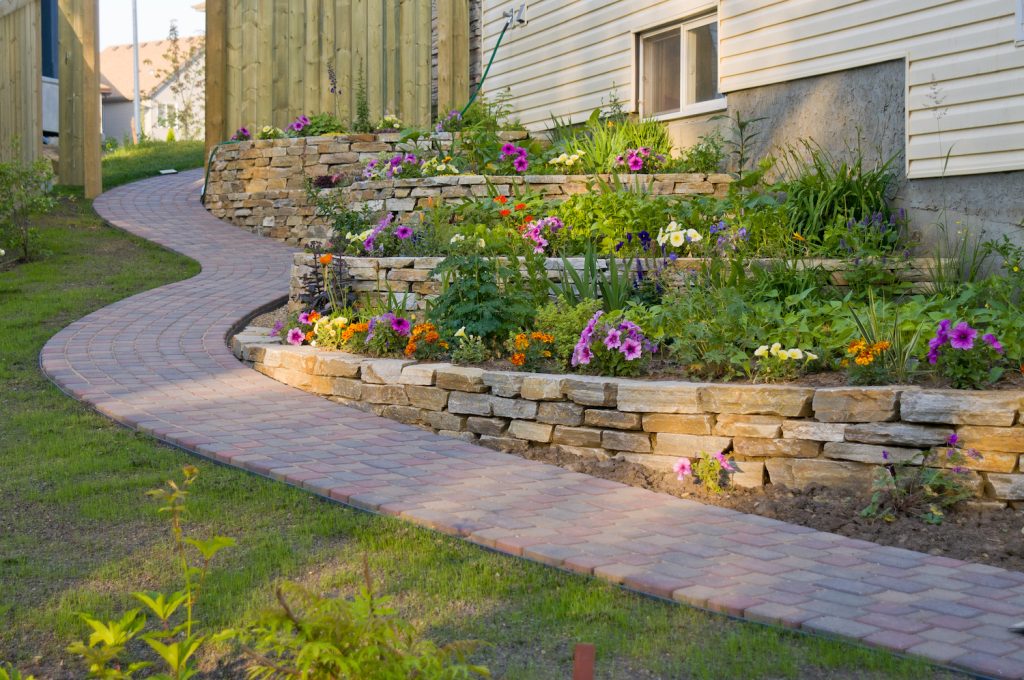
Key Takeaways
- Sloped yards need more planning than flat yards because panel height, post placement, ground gaps, and gates can all be affected.
- The two common installation styles are stepped fencing and racked fencing.
- Wood fencing can be flexible for custom layouts and privacy needs.
- Aluminum-style fencing can work well on uneven properties because it is commonly used for sloped or decorative boundary fencing. Sexton Fence’s material guide lists aluminum fencing as an option for sloped or uneven properties.
- Chain link can follow grade changes better than some rigid panel systems.
- Vinyl privacy fencing can look clean, but slope planning matters because many vinyl panels are more rigid.
Why Sloped Yards Need a Different Fence Plan
A flat yard is more straightforward. Fence posts can be lined up evenly, panels can sit at the same height, and gates are easier to place.
A sloped yard is different.
If the fence follows the ground too closely, it may look wavy. If the fence stays perfectly level, it may leave large gaps underneath. If the gate is placed on the wrong part of the slope, it may drag, swing poorly, or leave too much space at the bottom.
That is why the best fence for a sloped yard is not always the same as the best fence for a flat backyard. The slope changes how the fence is built, how it looks, and how well it works for privacy, pets, and security.
Sexton Fence provides fence installation services and lists High Ridge, MO as one of its served areas.
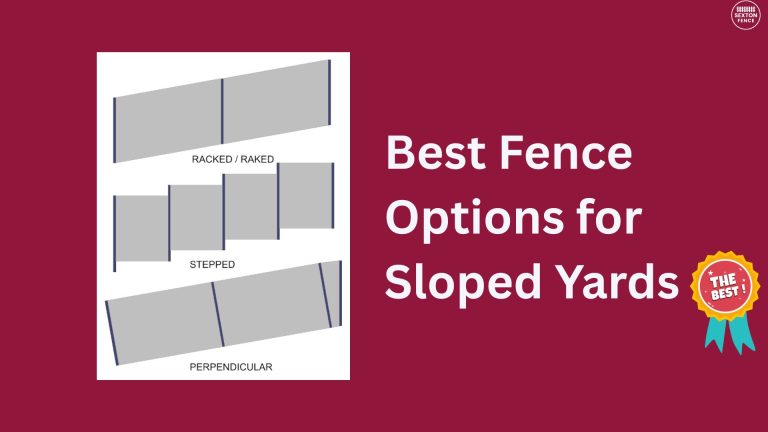
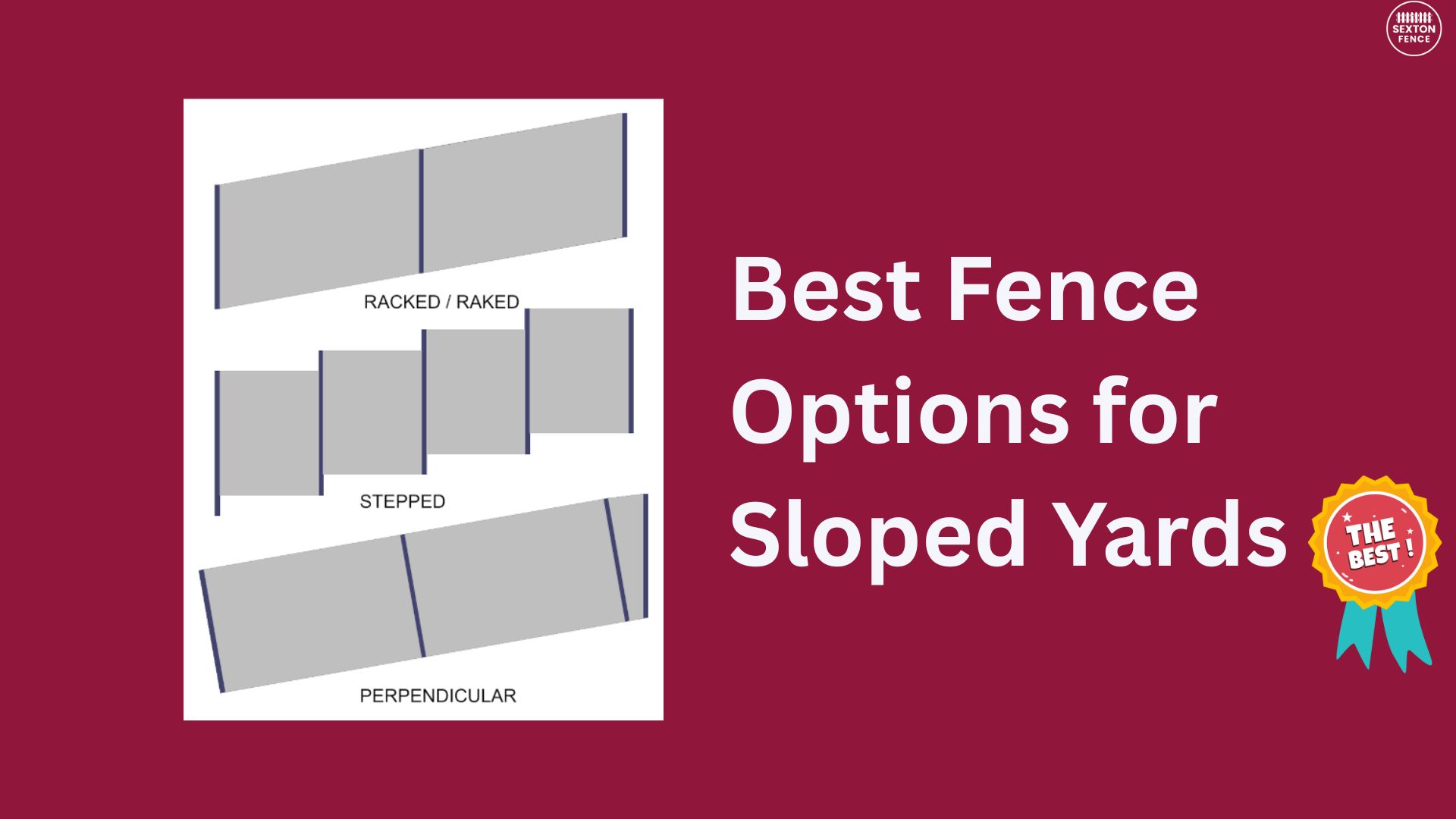
First, Understand the Two Main Slope Installation Methods
Stepped Fencing
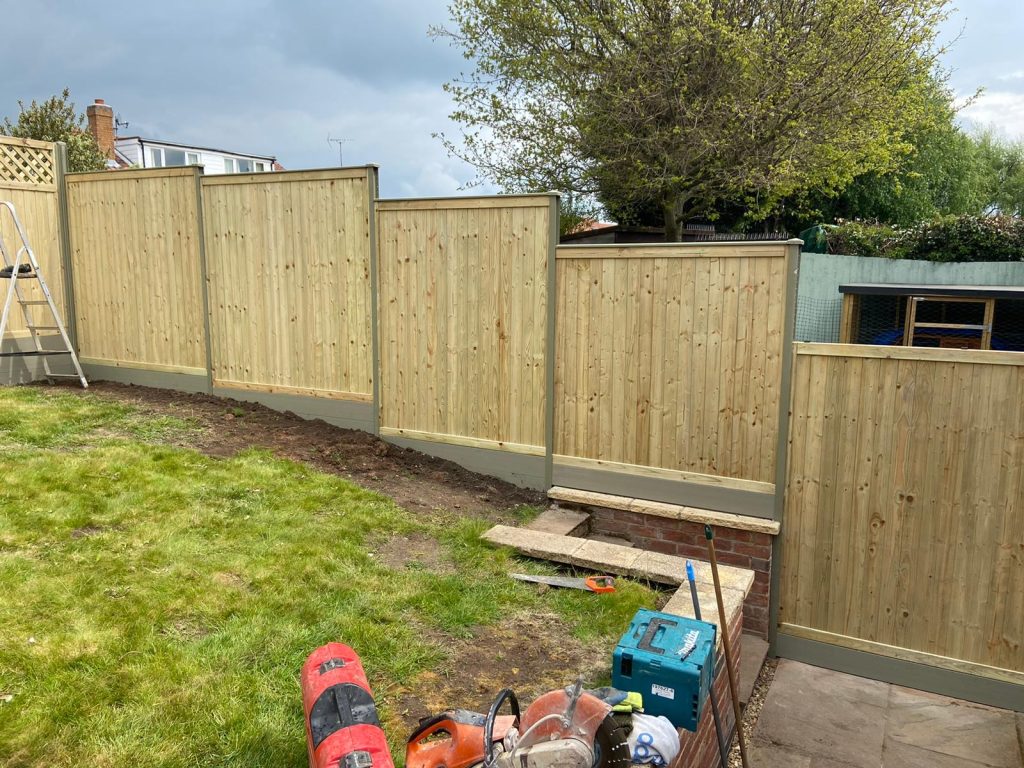
A stepped fence uses level panels that drop down in sections as the yard slopes. Each panel stays straight, but the fence line looks like steps.
This can work well for:
- Wood privacy fences
- Vinyl privacy fences
- Some decorative fences
- Yards where a clean, structured look matters
- Slopes that change in clear sections
The downside is that stepped fencing can leave triangular gaps under the panels. Those gaps may matter if the fence is meant to contain pets, improve privacy, or block visibility.
Racked Fencing
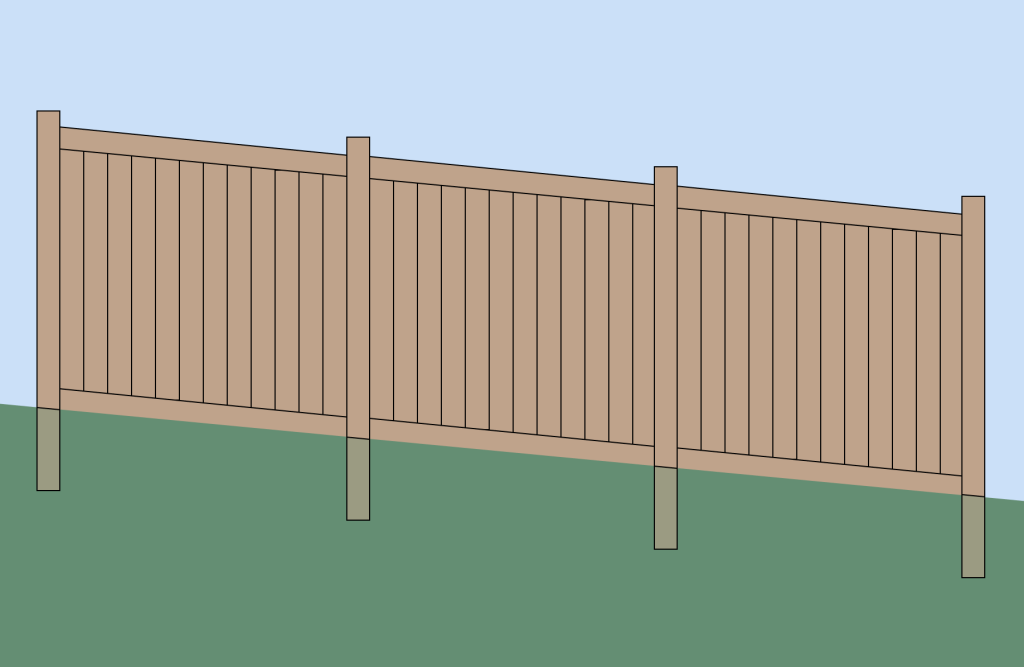
A racked fence follows the slope more closely. Instead of each panel staying level, the panel adjusts to the angle of the ground.
This can work well for:
- Chain link fences
- Some aluminum or ornamental fences
- Yards with gradual grade changes
- Pet containment
- Cleaner ground-level coverage
The advantage is that the fence can follow the terrain with fewer bottom gaps. The limitation is that not every fence material or panel style can rack well.
Wood Fencing for Sloped Yards
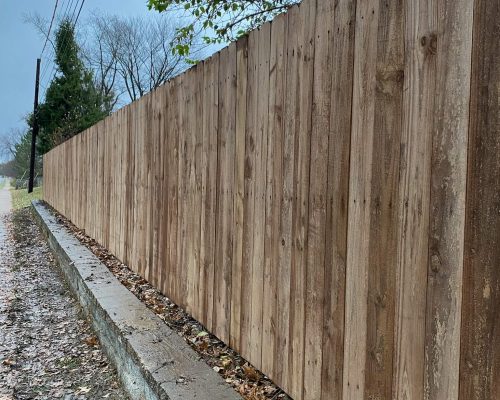
Wood is one of the most flexible fence options for sloped yards.
Because wood fences can be built with custom layouts, they often work well when the yard has uneven grade changes, privacy needs, or unusual property lines. Sexton Fence’s material guide describes wood fencing as a popular choice for homeowners who want a natural look with flexible design options, including privacy fences, semi-privacy fences, picket fences, and custom heights or layouts.
Wood fencing may be a good choice if you want:
- Backyard privacy
- A custom fence height
- A natural look
- Better control over gaps
- A fence that can be adjusted section by section
- A good fit around trees, landscaping, or uneven ground
For a sloped yard, wood can be installed in a stepped layout or custom-built to follow the grade more closely. The right choice depends on how steep the slope is and how much bottom gap you can accept.
If pets are part of the reason for the fence, the bottom spacing needs extra attention.
A stepped wood fence may look clean, but the gaps under each section can become escape points if they are not planned correctly.
Vinyl Fencing for Sloped Yards
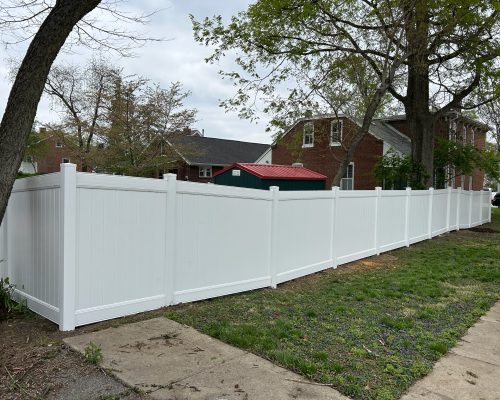
Vinyl fencing can be a good option if you want a clean look and lower maintenance. Sexton Fence describes vinyl fencing as a low-maintenance option that does not require painting or staining and has a uniform appearance over time.
But vinyl needs careful planning on a sloped yard.
Many vinyl privacy panels are more rigid than wood. That means they may not follow the slope as easily. In some cases, vinyl fencing is installed in a stepped layout, which can create open spaces under sections of the fence.
Vinyl may work well if:
- The slope is mild or moderate
- You like a clean, uniform fence line
- You want privacy with less upkeep
- The gate can be placed on flatter ground
- You are comfortable with a stepped appearance if needed
Vinyl may not be the easiest choice if the slope is steep, uneven, or changes direction often. In that case, the contractor should look closely at panel style, post placement, and ground clearance before recommending it.
Chain Link Fencing for Sloped Yards
Chain link is one of the most practical fence options for uneven ground.
Because chain link fabric is flexible compared to solid panels, it can often follow changes in grade better than rigid fence systems. That makes it useful for pet containment, property boundaries, side yards, wooded edges, and larger areas where function matters more than full privacy.
Sexton Fence’s material guide describes chain link fencing as a practical option for security, pet containment, and clear property boundaries. It also notes options such as galvanized chain link, vinyl-coated chain link, multiple heights, and gate compatibility.
Chain link may be a good fit if you want:
- Pet containment
- A budget-conscious fence
- Visibility across the yard
- A fence that can handle grade changes
- A boundary fence for a larger property
- Less concern about full privacy
The main drawback is privacy. If the goal is to block a neighbor’s view or create a private backyard, chain link alone may not be enough. Privacy slats can help, but they add cost and may change the look of the fence.
Gate Placement Is Critical on a Sloped Yard
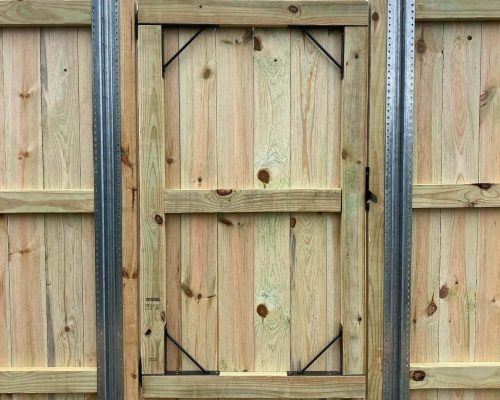
A gate is often the hardest part of fencing a sloped yard.
A fence panel can be adjusted to the grade, but a gate has to swing, latch, and stay aligned. If it is placed on a steep slope, it may drag on the ground or leave a large gap underneath.
The best gate location is usually the flattest practical spot along the fence line.
Before choosing a gate location, check:
- Does the gate have room to swing?
- Will it hit the ground as it opens?
- Is the latch easy to reach?
- Can lawn equipment pass through?
- Will water collect near the gate?
- Is the gate post strong enough?
- Will the bottom gap be a problem for pets?
Do Not Forget Drainage and Soil Conditions
Slope and water usually go together.
If the yard drains toward the fence line, the posts may sit in wetter soil. That can matter for long-term stability, especially with wood posts or areas that stay muddy after heavy rain.
A fence should not trap water, block drainage, or create a low spot where soil washes out under the fence. During the estimate, the contractor should look at how water moves through the yard and whether any sections need extra planning.
This is especially important near:
- Downspouts
- Swales
- Retaining walls
- Ditches
- Low corners
- Driveways
- Side yards
- Creek or wooded edges
Which Fence Is Best for Your Sloped Yard?
There is no single best fence for every sloped yard. The right choice depends on what you want the fence to do.
Goal | Fence Option to Consider |
Full backyard privacy | Wood privacy fence or vinyl privacy fence |
Better fit on uneven ground | Chain link or aluminum-style fencing |
Pet containment | Chain link, aluminum, or carefully planned wood |
Low maintenance | Vinyl or aluminum-style fencing |
Natural appearance | Wood fencing |
Decorative front yard boundary | Aluminum or ornamental-style fencing |
Budget-conscious boundary | Chain link fencing |
Custom layout | Wood fencing |
Final Thoughts: Match the Fence to the Slope, Not Just the Style
A sloped yard does not mean you have to settle for an awkward fence.
The key is choosing a fence material and installation style that fits the grade. Wood can offer flexibility and privacy. Vinyl can provide a clean, low-maintenance look when the slope allows it. Chain link can be practical for uneven ground and pet containment. Aluminum-style fencing can work well for decorative boundaries and sloped properties.
If you are planning a fence for a sloped yard in High Ridge, MO, Sexton Fence can help you compare materials, review the layout, and choose an installation approach that fits your property.